6 Pillars of Resiliency Every Manager Needs
High-performing roles demand a lot. Resiliency is what helps you handle it all—and keep going. In our multifamily world, more is needed than hustle. We’re breaking down what resilient support really looks like in high-demand environments, with Dr. Lindsay Bira.
Known as The Brain Expert, Dr. Bira has been featured by Nature, Science, Women’s Health Magazine, NPR, Forbes, and more for her work. She makes the neuroscience of mental health engaging and actionable through 1:1 sessions, speaking, and media appearances. In her private practice and as an adjunct medical professor, she specializes in stress, trauma, PTSD, anxiety, wellness, and more. In all her initiatives, she focuses on elevating the human experience to deepen purpose, create balance, and support success.
Six Domains or Pillars of Resiliency
The PR6—short for Predictive Resilience Six—is a comprehensive, neuroscience-based framework designed to strengthen resilience in high-performing, high-pressure environments. While it's a newer model, it's backed by emerging research and practical use in clinical and leadership settings.
The framework breaks resilience down into six core domains—each one measurable, actionable, and buildable over time. Here’s a quick look at the six pillars and how they support lasting resilience:
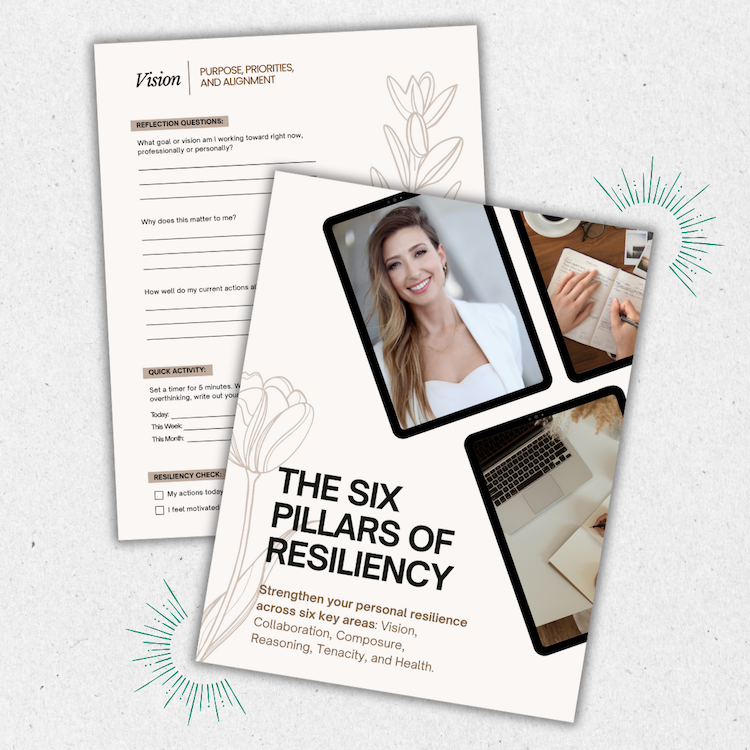
Vision
Number one, and Dr. Bira really wants to drive this home, the most important domain of resiliency is vision. This means having a sense of purpose and meaning, alignment and priorities that we have set so that we can view them, and having goals that naturally motivate us. This is the most important stuff. So just having a vision, in a personal relationship, in a professional role for a goal for the team, or some type of advancement you're trying to get to with your company. That vision piece is the most important because we can't see it, we can't even literally walk toward it.
The foundation of resilience starts here. Vision isn’t just about setting goals—it’s about having a clear sense of purpose, direction, and personal meaning. It’s knowing why you do what you do, and aligning your daily actions with what matters most.
When there's no vision, it's easy to feel scattered or unmotivated. But with one in place, you're not just reacting to life—you’re intentionally moving toward something that fuels you. Whether it’s a goal for your team, your career, or your personal growth, vision helps you focus and stay on track—even when challenges hit.
It also taps into how our brains learn. Once we can name and define what we want, we gain a sense of control. That’s why clarity matters so much—when you can see it, you can start building toward it.
Want to boost your own resilience? Start by defining your vision. Ask:
What truly matters to me right now?
What am I working toward, and why?
Do my daily actions reflect those priorities?
Vision isn’t a one-time realization—it’s a practice. And when it’s clear, it becomes the compass that guides your choices, energy, and resilience forward.
Collaborative Relationships
The second most important is collaboration. This is our relationships with other people, good relationships with other people. This is also social confidence and having strong support networks that we can lean on, a real sense of trust in the people around us, and teamwork. So especially if somebody's in a leadership role or a managerial role, this is being able to delegate to your team and trust that they're going to do the work. It’s being able to lean on different people in your life. And it’s being able, from a personal perspective, to be vulnerable enough to share parts of your inner experience with people in your world which deepens your connections and increases intimacy which increases good relationships, support networks, and all of that. So a sense of collaboration and being able to lean into other people is very important.
Because of the pandemic, teams are still fragmented. In the office dynamic, people are getting paranoid a little bit. Like when you haven't seen somebody in six months or longer and they just shoot off an email with no greeting or no sign-off and it just says, need this thing done tomorrow. It feels cold, and anybody is going to get the sense that it was a little harsh. Even though it might not have been harsh. They might have been doing it with a smile on their face saying, “Oh I love this person I’m sending this email to because I know they'll get it done.” But we don't get that. So we're really missing some of that in-person exposure and taking the time to really put in those greetings and signoffs that protect and build relationships.
For instance, using emojis. When we weren't the generation that started with the emojis, it feels a little bit weird and cheesy, almost overly dramatic. But this is an example of how we have to adapt in order to keep cohesion. We have to adapt to the new norms of communication. The journal, American Medical Association, or JAMA, just came out with a study that looked at what has happened because of the pandemic. We're seeing a lot more mental health symptoms and a lot more fragmentation in social connections. However, there's less stigma around mental health and talking about difficulties than there ever has been before.
We're struggling more, but we're also talking more about it. And for me, I view that as a gift. We will take more struggle if it allows us to really address concerns, and develop language and culture that allows us to grow together and be better humans. From the collaboration domain side, yes, we're more fragmented, we need to account for some of the things that we've lost, the relationships that we've lost in the face of Covid, but we can also have these conversations with our teams better asking what they need. This makes resilient teams. Two things can exist together at the same time that almost seem conflicting, but they're not. Struggle can mean growth and that's awesome.
Composure
Resilience isn’t built in isolation—it’s strengthened through connection. The second core domain, Collaboration, is all about building and maintaining strong relationships, trusting others, and creating a support system that you can rely on.
In leadership roles, this means being able to delegate and trust your team. In personal life, it’s about feeling safe enough to be vulnerable—because that’s where real connection and mutual support grow.
Post-pandemic, many teams and friendships still feel fragmented. Without regular face-to-face interaction, even small things like skipping a greeting in an email can come off as cold or disconnected. That’s why intentional communication—yes, even emojis—matters more than ever. It's not just about being polite; it's about preserving cohesion and empathy.
Research shows we’re dealing with more mental health challenges—but we’re also talking about them more openly. That’s progress. Collaborative resilience means embracing both truths: We can be struggling and growing at the same time.
The key? Make space for check-ins. Prioritize relationships. Ask what your team or friends really need. Collaboration isn’t soft—it’s strategic. And it's a core part of staying resilient in today’s world.
Reasoning
Resilience isn’t just about staying calm—it’s about what you do next. That’s where Reasoning comes in.
Reasoning is your ability to adapt, plan, problem-solve, and stay resourceful in the face of challenges. It’s asking: “What now?” and “How do I still move toward my goals?”—even when the unexpected happens.
This domain is closely linked with creativity and introspection. In fact, research shows that creatively solving a problem can feel more rewarding than if it had been easy to begin with. It builds confidence, strengthens relationships, and deepens trust in yourself and others.
But here’s the thing: you can’t access clear reasoning without composure. These two domains work in tandem. If you’re spiraling in stress, you’ll struggle to tap into your problem-solving brain. Composure gives you the pause, reasoning gives you the plan.
Strong leaders model both. They don’t just fix problems—they show their teams how to respond with calm, curiosity, and creativity. That’s where real trust and motivation are built.
So when emotions run high, try this:
Notice it. (“Isn’t it interesting how strong this emotion is?”)
Regulate. Go for a walk, call a friend, take a nap—whatever helps you reset.
Refocus. Ask, “What’s one small thing I can do right now?”
That’s reasoning in action. It's not about having the perfect answer—it’s about staying flexible, present, and willing to try again.
Tenacity
“Tenacity... it’s our ability to bounce back quickly no matter what happens. Literally, no matter what happens in our life, being able to say, “Why is this happening? Well, because I’m human, I’m alive, and I have a high-paced job, so of course, I’m experiencing this. So, what can I do next?” ”
— Dr. Lindsay Bira
Tenacity is the grit that keeps us going when life doesn’t go as planned. It’s the blend of mindset + action that says: “I’ll keep showing up no matter what.”
At its core, tenacity is persistence. It’s about staying motivated through uncertainty, bouncing back from setbacks, and holding a realistic sense of optimism. That doesn’t mean ignoring the hard stuff—it means embracing it with purpose.
As Dr. Lindsay Bira puts it:
“If I’m human, alive, and in a high-paced role, of course I’m experiencing this. So, what can I do next?”
That mindset shift—from why me? to what now?—is what tenacity is all about.
In tough moments, it’s easy to spiral into blame or frustration. But resilient people lean into the idea that struggle is part of the deal. It’s not a sign you’re doing something wrong—it’s a reminder that you’re in the game. You’re growing, stretching, learning.
Leaders who model tenacity inspire teams to do the same. They don’t just “power through”—they reframe setbacks as part of the path. They adapt, reset, and keep going with clarity and conviction.
One of the best examples? Albert Einstein once said:
“I’m not the smartest person—I’m just more persistent than anyone I’ve met.”
Tenacity fuels progress, creativity, and well-being. And when paired with the other domains of resilience—like composure, reasoning, and vision—it becomes the engine that keeps us moving forward, even when the road changes.
Health
Health is the foundation of resilience. When it comes to bouncing back, leading well, and thinking clearly—your body and brain need to be in top form. That means quality sleep, regular movement, nutritious food, and a positive view of your health.
Too often, we treat health like a “nice to have” instead of a non-negotiable. But the truth is:
You can’t operate at 100 mph and expect to lead well if your health is falling apart.
So what helps? Think small systems with big payoff:
Sleep: Prioritize it. Tools like the Oura Ring or other trackers can make you more mindful of patterns and help improve your rest over time. Better sleep = better brain function = better everything.
Nutrition: Set yourself up for success. Meal delivery services (especially ones focused on clean eating like paleo) can keep healthy options within reach when you’re busy and tempted to grab junk.
Exercise: Build in accountability. A trainer, a buddy, a scheduled class—whatever keeps you moving. Consistency matters more than intensity.
Yes, health tools can cost money—but investing in your well-being pays off. Even short-term changes or budget-friendly alternatives make a difference. What matters most is deciding: This is important enough to build into my life.
Because at the end of the day, health supports every other domain of resilience—your reasoning, your tenacity, your vision. Without it, the whole system starts to wobble.
Put It Into Action
Let’s wrap it all up. According to Dr. Lindsay Bira, the six domains of resiliency are:
1. Vision
Your sense of purpose and meaning. When your goals, values, and daily actions are aligned, it creates natural motivation. Try this: set a 5-minute timer and map out your vision for the day, the week—or even the month. It’s a small habit that builds serious resilience.
2. Collaboration
Strong relationships matter. Whether it’s your team at work, a support system at home, or your broader network, good communication and connection help you navigate challenges more effectively.
3. Composure
This is your ability to regulate your nervous system. When stress hits, composure is what allows you to pause, breathe, and stay grounded—so you can access…
4. Reasoning
Clear thinking under pressure. With composure in place, you can make thoughtful decisions, assess situations, and solve problems with a calm, focused mindset.
5. Tenacity
That persistent, resilient mindset. Tenacity is about staying motivated, bouncing back, and holding onto a realistic sense of optimism—even when things get tough.
6. Health
Sleep. Nutrition. Movement. Health is the base that supports everything else. You can’t think clearly or bounce back well if you’re running on fumes.
Here’s the best part:
💡 These six areas are accessible to everyone. You don’t need a big budget to start building resilience. Just a little intention and consistency.
Start with Vision—it sets the tone. From there, check in on your relationships, build in calming habits, and support yourself with daily health basics. Keep learning, adjusting, and asking yourself: Where can I grow a little stronger today?
Resilience isn’t just a trait—it’s a practice. And it’s always within reach.