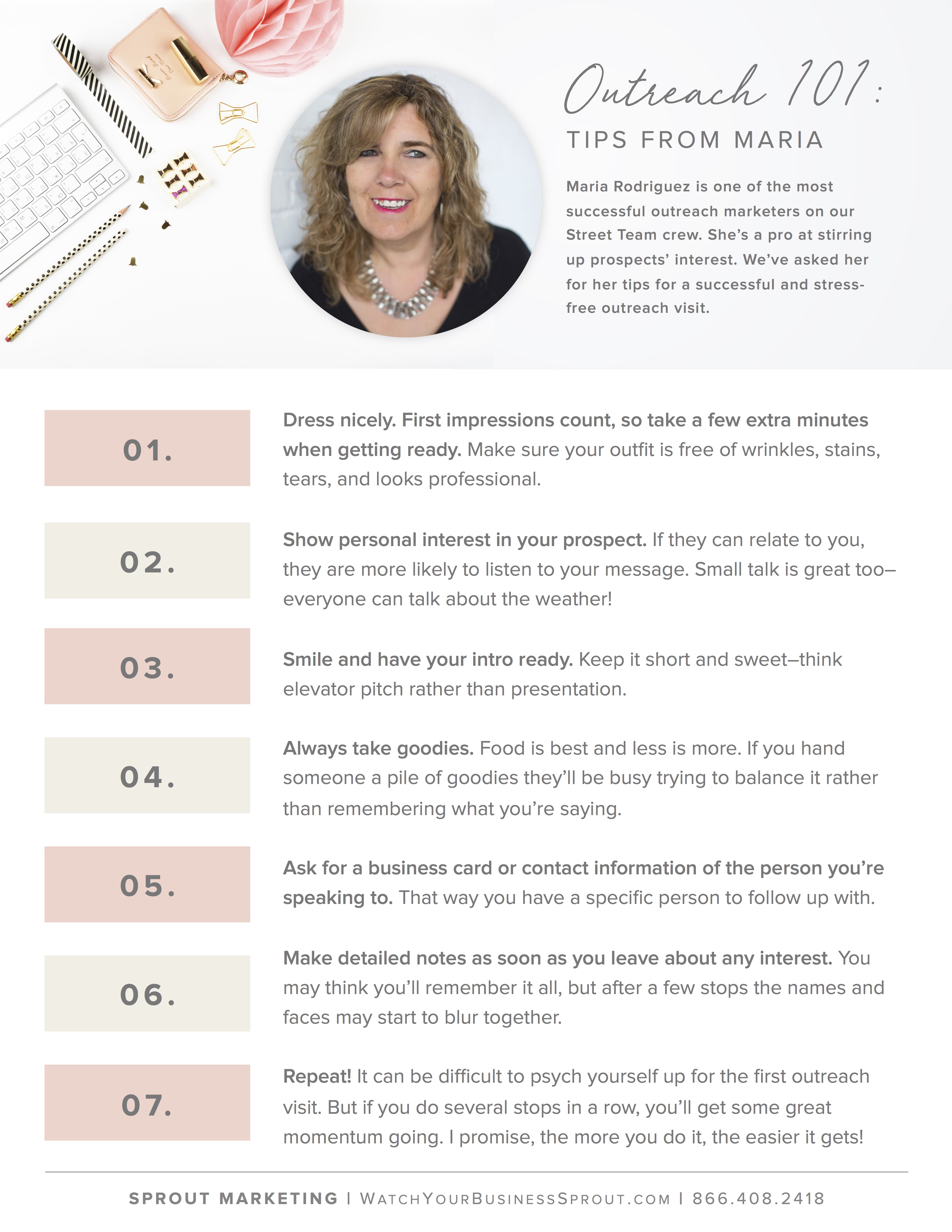
What to Say & How To Document
Outreach Confidence | A Better Way to Introduce Yourself
Outreach Confidence | A Better Way to Introduce Yourself
Let’s be honest. Outreach marketing can feel awkward at first. You’re walking into someone’s workplace, interrupting their day, and trying to make a good impression in about thirty seconds. No wonder so many people default to saying,
“Hi, can I leave some flyers?”
Here’s the truth: outreach doesn’t feel awkward when it’s done with confidence and purpose.
You’re not walking in as a salesperson. You’re walking in as a connector. You represent a community full of residents who live, shop, and work in the same area as the people you’re visiting.
That means you actually have something valuable to offer: local support, partnership opportunities, and housing solutions that make life easier for them or their team.
Start Simple: The Friendly Intro
If you’re new to outreach, keep it light and natural:
“Hi! We brought some goodies and I just wanted to introduce myself. I’m [Your Name] from [Community Name]. We’re right around the corner and love getting to know our neighbors.”
That’s it. No pitch. No pressure. Just a friendly, neighborly start that makes people feel at ease.
Step It Up: The Confident Connector
Once you’ve warmed up, you can add a little more confidence and context:
“Hi, I’m [Your Name], the property manager at [Community Name]. I represent about [###] households, which means a lot of local buying power right here in the neighborhood. I wanted to share a bit about our community and see how we might support each other.”
See the difference? Now you’re walking in with purpose, not permission. You’re showing them you’re part of something bigger and that you want to bring value, not take time.
Pro Tips for a Great First Impression
Smile first, talk second. People usually decide how they feel about you before you even start talking.
Keep your energy warm but calm. You’re there to connect, not to pitch.
Match their vibe. If they’re rushed, keep it short. If they’re chatty, let the conversation flow.
Offer value early. Mention preferred employer perks, resident referrals, or fun cross-promotion ideas.
End clearly. Leave your flyer or business card and let them know you’ll stay in touch
What to Say
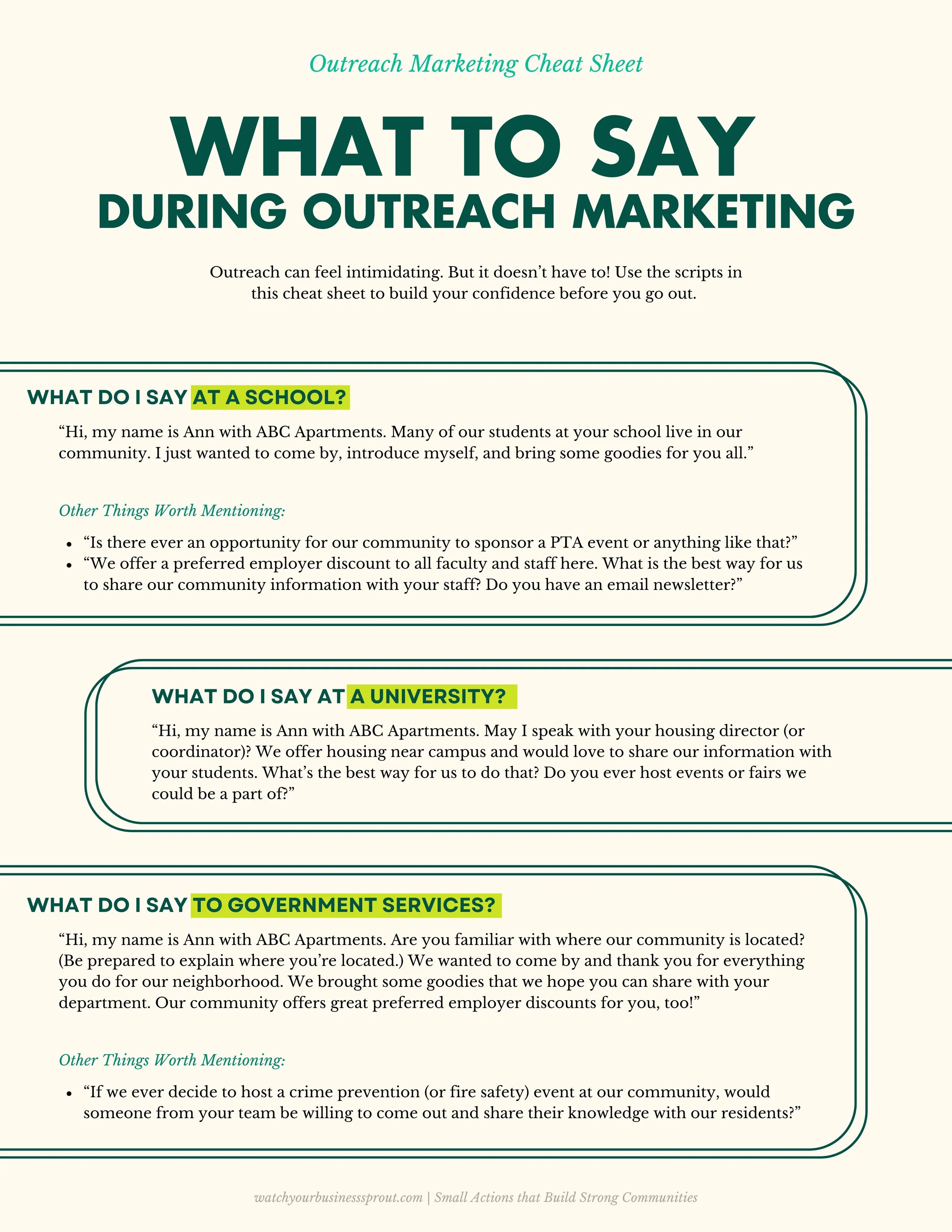
Plan for the Unexpected Roadblocks
What do I do when…
There may be occasions where you’ll run into obstacles or hurdles. Don’t fret! When you think ahead and your team has a plan in place, they won’t hinder your success. Below are a few examples and how to get around them.

No soliciting signs
Sometimes acknowledging the objection first gets you the upper hand.
“Hello! I’m ----from Sprout Apartments. I see your no soliciting sign, but no worries! We aren’t soliciting, we wanted to stop by and say hello. We have some goodies for your team to enjoy this afternoon too!”
We are too busy to visit right now
“I completely understand. I’m glad that business is going so well for you! Is there a better time for us to come back to a chat? We’d love to share some information with your team about our community. In the meantime, enjoy some goodies, on us! The flyer here has all of our current info - feel free to reach out anytime! We’ll chat later.”
Not interested
This is why goodies are such a must! Who can turn down sweets??
“We don’t want to take up a lot of your time, just wanted to leave some information about what our community offers that would benefit your employees and fill their needs”
Getting past a gatekeeper
“Hi! I’m from Sprout Apartments and I wanted to talk to someone about cross-promotion opportunities. Many of our residents look to us for local business recommendations. We’d love to chat about having a future event or discuss opportunities that will benefit both of our companies.”
Your Documentation spreadsheet:
Print this out before you hit the road so you can keep accurate notes along the way.
Document Everything (You’ll Thank Yourself Later)
One of the biggest outreach mistakes people make is not documenting their visits. You think you’ll remember who you talked to, what they said, or which location had that perfect cross-promo opportunity — but by the fifth or sixth stop, it all starts to blend together.
So here’s how to make documentation easy and useful:
1. Always ask for a business card.
Even if the person you speak with isn’t the decision-maker, their name matters. Often the receptionist gives you the card for the owner, doctor, or manager. When you follow up, you’ll want to say something like, “I spoke with Sarah at the front desk — she was kind enough to share your card.” That instantly builds credibility.
2. Bring a pen and jot quick notes right after your visit.
If you’re not handed a card, keep a small notebook or notepad handy to write down the business name, the person you spoke to, and any key takeaways. It’s even easier if you have a buddy with you — one can chat while the other takes notes.
3. Don’t wait until the end of the day to log your notes.
Lauren and I learned this the hard way. We try not to visit too many businesses back-to-back without stopping to type notes. We keep a shared spreadsheet open in Google Sheets so we can update it offline in the car before we forget details.
4. Keep your notes meaningful, not messy.
Avoid “nice lady at front desk” or “left flyers.” Be specific. Write who you spoke to, what you left, and what the next step should be. Example: “Talked to Keisha, receptionist. Said her manager might want to cross-promote. Sent email follow-up.”
5. Color-code your contacts.
We do this every time:
Yellow = Hot Leads (people actively looking for an apartment). Follow up quickly.
Green = Cross-Promo Opportunities (businesses open to partnership ideas).
This makes it easy to prioritize who to contact next.
6. Use your notes for follow-up and future visits.
Your spreadsheet is your memory bank. If someone moves on, another team member can pick up where you left off. It also helps you track progress — which locations you’ve already visited, what worked well, and where to go next time.
Remember this: Every good outreach visit is worth half as much if you don’t document it. Notes turn one-time visits into long-term relationships.
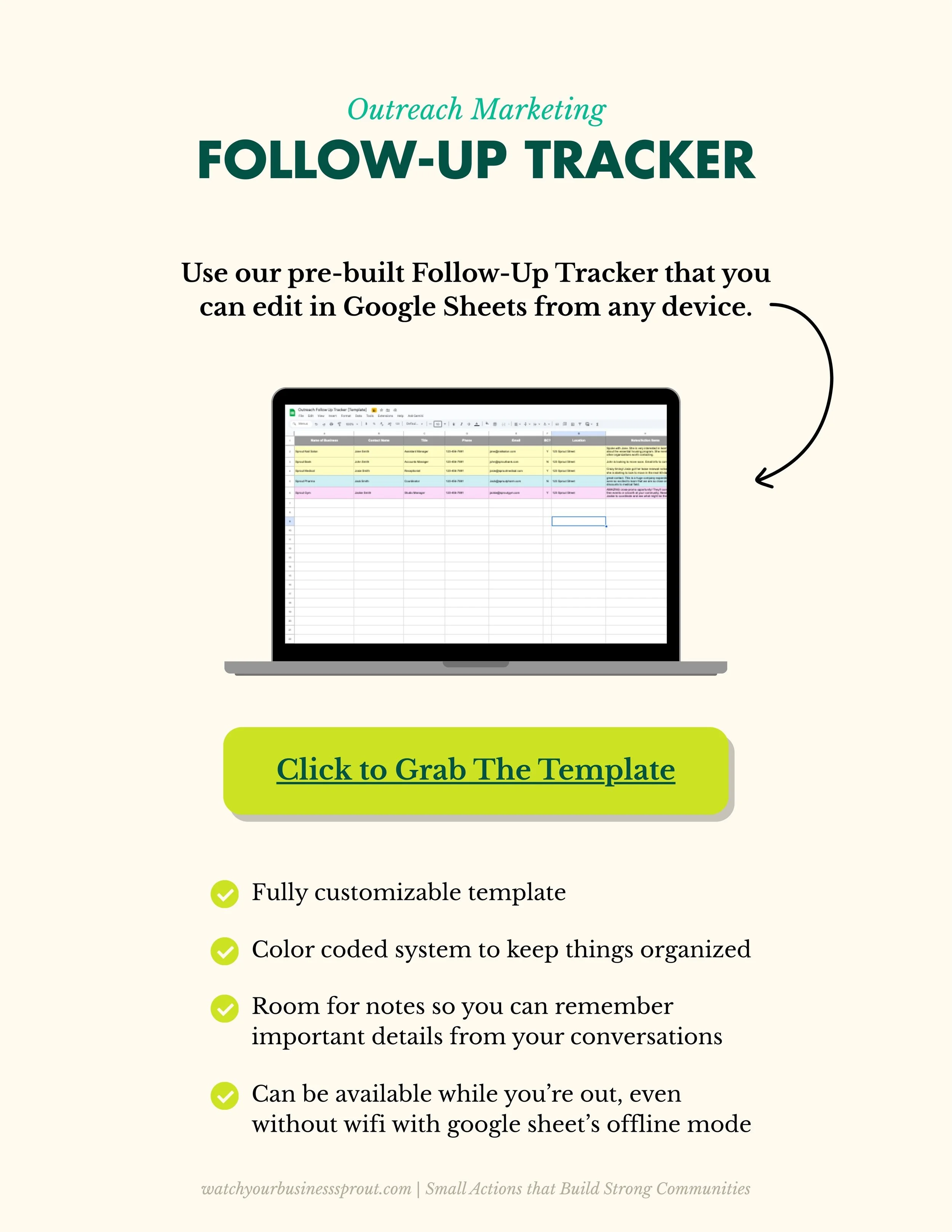
Click on the image to download your “Follow-Up” guide.